Civil Procedure Beyond National Borders
Summary: 1. Introduction. – 2. Harmonisation as a Result of National Law Reform. – 3. Harmonisation as a Result of Competition between Procedural Systems. – 4. Intended Harmonisation. – 5. Final Remarks.
Abstract
The paper will especially focus on (1) Harmonisation as a result of national law reform, (2) Harmonisation as a result of competition between procedural systems, and (3) Harmonisation as a result of international harmonisation projects
About Authors
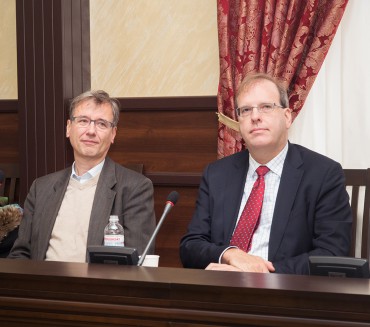
Cornelis Van Rhee,
Professor of European Legal History and Comparative Civil Procedure Department of Foundations and Methods of Law Faculty of Law,
Maastricht University, the Netherland
PO Box 616 6200 MD Maastricht Netherlands
References
- H Aa et al (eds), Bronnen van de Nederlandse Codificatie sinds 1798 (Kemink en Zoon N V, Utrecht 1968) vol I 459-461: (Ontwerp-Cras 1804).
- F Klein, Pro Futuro: Betrachtungen über Probleme der Civilprocessreform in Österreich (Franz Deuticke 1891) 41 ff.
- Trockner and Varano (n 33) 255-258; and R Verkerk, Fact-finding in Civil Litigation: A Comparative Perspective (Intersentia 2010) 37.
- G P Miller, ‘The Legal-Economic Analysis of Comparative Civil Procedure’ [1997] American Journal of Comparative Law 905.
- C H van Rhee, Litigation and Legislation: Civil Procedure at First Instance in the Great Council for the Netherlands in Malines (1522-1559) (Archives générales du Royaume1997) 313 ff. See also C H van Rhee, Civil Procedure: A European Ius Commune? (European Review of Private Law 2000) 589-611.
- A W Jongbloed, ‘The Netherlands (1838-2005)’ in C H Van Rhee (ed.), European Traditions in Civil Procedure (Ius Commune Europaeum 54), (Intersentia 2005) 69-95.
- D Heirbaut, ‘Efficiency: the Holy Grail of Belgian Justice?’ in Uzelac and Van Rhee (eds) Access to Justice and Judiciary: Towards New European Standards of Affordability, Quality and Efficiency of Civil Adjudication (Intersentia 2009) 89-117.
- G Chase et al (eds), Civil Litigation in Comparative Context (Thomson/West 2007) 35-36.
- D P Blok et al (eds), Algemene Geschiedenis der Nederlanden, vol. IV (Unieboek B V Bussum 1980) 135 ff, and idem311 ff.
- C H van Rhee, ‘The Influence of the French Code de Procédure Civile (1806) in 19th Century Europe’ in Cadiet and Canivet (eds), De la Commémoration d'un code à l'autre: 200 ans de procédure civile en France (Litec 2006) 129-165 ; ; Heirbaut (n 47).
- C H van Rhee, ‘Ons tegenwoordig sukkelproces’: Nederlandse opvattingen over de toekomst van het burgerlijk procesrecht rond 1920 (Tijdschrift voor Rechtsgeschiedenis 2000) 331-346.
- C H van Rhee, ‘The Development of Civil Procedural Law in Twentieth-Century Europe: From Party Autonomy to Judicial Case Management and Efficiency’ in C H van Rhee (ed), Judicial Case Management and Efficiency in Civil Litigation (Intersentia 2008).
- C H van Rhee (n 40). The use of the term ‘approximation’ is based on the title of the Report of the Storme Group, discussed below (M Storme (ed), Approximation of Judiciary Law in the European Union/ Rapprochement du Droit Judiciaire de l’Union européenne (Kluwer, Dordrecht 1994). See now also Art. 81(1) of the Treaty on the Functioning of the European Union.
- C H van Rhee (n 53); R Stürner, The Principles of Transnational Civil Procedure: An Introduction to their Basic Conceptions (Rabels Zeitschrift 2005) 226-227.
- C H van Rhee, ‘Introduction’ in C H Van Rhee (ed) European Traditions in Civil Procedure (Intersentia 2005) 23.
- A Wijffels, ‘The Code de procédure civile (1806) in France, Belgium and the Netherlands’ in C H van Rhee et al. (eds.), The French Code of Civil Procedure (1806) after 200 years. The Civil Procedure Tradition in France and Abroad (Kluwer 2008) 5-73.
- P Oberhammer and T Domej, ‘Germany, Switzerland and Austria (ca. 1800-2005)’ in C H van Rhee (ed), European Traditions in Civil Procedure (Intersentia 2005) 103-128.
- H W Fasching, ‘Die Weiterentwicklung des österreichischen Zivilprozessrechts im Lichte der Ideen Franz Kleins’ in Hofmeister (ed), Forschungsband Franz Klein (1854-1926). Leben und Wirken (Manz 1988) 97-117, and Van Caenegem (n 32) 97.
- G Walter, ‘The German Civil Reform Act 2002: Much Ado About Nothing?’ in Trockner and Varano (eds), The Reforms of Civil Procedure in Comparative Perspective (Giappichelli Editore 2005) 67-72.
- C H van Rhee, Civil Procedure: A European Ius Commune? (European Review of Private Law 2000) 589-611.
- S Vogenauer and C Hodges (eds), Civil Justice Systems in Europe: Implications for Choice of Forum and Choice of Contract Law (Hart Publishing 2011).
- P Albers, ‘Judicial Systems in Europe Compared’ in Van Rhee and Uzelac (eds) ,Civil Justice between Efficiency and Quality: From Ius Commune to the CEPEJ (Intersentia 2008) 9-28.
- P Albers, ‘Quality Assessment of Courts and the Judiciary: From Judicial Quality to Court Excellence’ in Uzelac and Van Rhee (eds), Access to Justice and Judiciary: Towards New European Standards of Affordability, Quality and Efficiency of Civil Adjudication (Intersentia 2009) 57-74.
- Doing Business Reports of the World Bank are of interest. Part of the comparison made by the World Bank concerns the national justice systems of the various economies. See <www.doingbusiness.org/> accessed 3 January 2019).
- G Walter and S Baumgartner, ‘Utility and Feasibility of Transnational Rules of Civil Procedure: Some German and Swiss Reactions to the Hazard-Taruffo Project’ [1998] Texas International Law Journal 463-476.
- M Storme (ed), Approximation of Judiciary Law in the European Union/ Rapprochement du Droit Judiciaire de l’Union européenne (Kluwer, Dordrecht 1994).
- L Ervo, ‘Party Autonomy and Access to Justice’ in Ervo, Gräns and Jokela (eds), Europeanization of Procedural Law and the New Challenges to Fair Trial (Europa Law Publishing 2009) 26.
- C H van Rhee, ‘Civil Procedure in a Globalizing World: A Historical Perspective’ in Faure and Van der Walt (eds), Globalization and Private Law: The Way Forward (Edward Elgar 2010) 343-367.
- M Storme (ed), Approximation of Judiciary Law in the European Union/ Rapprochement du Droit Judiciaire de l’Union européenne (Kluwer, Dordrecht 1994).
- ALI/UNIDROIT, Principles of Transnational Civil Procedure (Cambridge University Press 2006).
- Código Procesal Civil Modelo para Iberoamérica (1994).
- E Storskrubb, Civil Procedure and EU Law. A Policy Area Uncovered (Oxford University Press 2008) 1-3, 78.
- Golder v. UK, 4451/70, judgment of 21 February 1975.
- P van Dijk et al, Theory and Practice of the European Convention on Human Rights (Intersentia 2006) 578-596.
- M Freudenthal, Schets van het Europees civiel procesrecht (Kluwer 2007) 269-270.
- A Biondi, ‘Minimum, Adequate or Excessive Protection? The Impact of EC Law on National Procedural Law’ in Trockner and Varano (eds), The Reforms of Civil Procedure in Comparative Perspective (Giappichelli Editore 2005) 233.
- R Stürner, The Principles of Transnational Civil Procedure: An Introduction to their Basic Conceptions (Rabels Zeitschrift 2005) 203.
- G C Hazard et al, ‘Introduction to the Principles and Rules of Transnational Civil Procedure’ [2001] New York University Journal of Law and Politics 770-771.
Reviews for article
Add a Review
Kорнеліус Ван Реє. Цивільне процесуальне право поза національними межами. Access to Justice in Eastern Europe, 2018, No 1, 15-34.
Анотація. Стаття присвячена проблемі гармонізації цивільного процесуального права в Європі та в глобальному масштабі. Автор зосереджує увагу на таких питаннях як гармонізація в результаті реформи національного законодавства, гармонізація внаслідок конкуренції між процесуальними системами та гармонізація як результат відповідних міжнародних проектів. Спроби гармонізації цивільного судочинства зробили вивчення порівняльного цивільного судочинства (включаючи історію цієї галузі юридичних наук) захоплюючою сферою дослідження впродвож останніх кількох десятиліть. Хоча порівняльне дослідження цивільного судочинства спочатку було сферою діяльності реформаторів національного законодавства, зайнятих розробкою нових або зміною існуючих кодексів цивільного процесу в національному контексті, орієнтуючись, в основному, на сусідні юрисдикції, глобалізація зробила його полем для вивчення більш широкої аудиторії. Це перспективний напрямок дослідження, зокрема, для випадків, коли національні процесуальні системи конкурують між собою за розгляд господарських справ в судах. Порівняльне цивільне судочинство дозволяє цим системам оцінювати їх сильні та слабкі сторони на міжнародному полі, враховуючи вибір учасників судових процесів, які стають все більш мобільними, якщо це стосується вибору суду конкретної держави для розгляду їхньої справи. Як зазначає автор, саме бізнес-компанії мають певні преференції щодо вибору конкретної процесуальної моделі судочинства, про які мають бути обізнані юрисдикції, якщо вони хочуть залучити судові процеси до власних державних судів. Окрім того, ця галузь дослідження допомагає у спробах наблизити цивільне процесуальне законодавство до міжнародного контексту. І хоча успіхи розвитку цієї галузі доволі обмежені, Принципи транснаціонального цивільного процесу Американського інституту права та Unidroit та Європейські правила цивільного судочинства Європейського інституту права та Unidroit демонструють перспективність цього напрямку.
Ключові слова: гармонізація цивільного процесу, національна реформа права, процесуальні системи, міжнародні проекти гармонізації.
How to cite it?
- C H Van Rhee, 'Civil Procedure Beyond National Borders' (2018) No 1 (1) Access to Justice in Eastern Europe 15-34.