EDITORIAL
Introductory Remarks: Navigating New Legal Paradigms
ABSTRACT
The first issue of Access to Justice in Eastern Europe in 2026 presents a collection of research from a diverse international cohort of scholars representing Bulgaria, Kazakhstan, Latvia, Lithuania, Romania, Saudi Arabia, the United Arab Emirates, and Ukraine. This issue explores the evolving landscape of contemporary justice through four primary lenses: the pursuit of transitional justice and post-mortem dignity; the development of child-sensitive procedural models for the most vulnerable; the regulation of emerging technologies, including artificial intelligence and autonomous weapons; and specialized regional legal challenges in sectors such as agriculture, corporate governance, and sports law. By bridging historical perspectives with future-oriented legal analysis, this issue underscores the journal’s commitment to advancing the rule of law and fostering global scholarly dialogue amidst a shifting legal paradigm.
EDITORIAL
As we mark the beginning of 2026, we are pleased to present the first issue of the year. This issue of Access to Justice in Eastern Europe exemplifies our commitment to international scholarly exchange, bringing together diverse perspectives from across the globe. We are proud to feature contributions from esteemed researchers based in Bulgaria, Kazakhstan, Latvia, Lithuania, Romania, Saudi Arabia, the United Arab Emirates, and Ukraine, among others.
This geographical breadth ensures a rich, comparative dialogue on the most pressing legal challenges facing our regions today. The variety of topics is broad but clearly addresses the fundamental challenges of humanity; these are reflected in the shifting boundaries of human dignity, the pursuit of transitional justice, and the protection of the most vulnerable members of our global society.
Our contributors navigate the complexities of modern governance by exploring the intersection of law and emerging technologies, from the ethical integration of artificial intelligence to the regulation of autonomous weapons systems. Furthermore, the issue delves into the intricacies of specialized legal regimes, examining the evolution of property rights, the nuances of international sports law, and the necessity of robust compensation mechanisms in the face of nuclear risks. Together, these studies provide a critical lens through which we can better understand the ongoing transformation of legal systems in a world characterized by both rapid innovation and persistent conflict.
As always in my introductory remarks, I would like to highlight the specific contributions that define the scholarly depth of this issue and have particularly caught the attention of the editorial team and invited experts during our work, as each author offers a unique vantage point on the legal transformations currently shaping our global landscape.
I would like to specifically recommend them in my opening words. In the article "Transitional Justice Mechanisms and Societal Reconciliation for Rule of Law and Democracy Consolidation in Post-Communist Romania. Jurisprudential Perspectives on Reparatory Rights, Lustration and Regime of Property," Anca Parmena Olimid, Cătălina Maria Georgescu, and Cosmin Lucian Gherghe provide a comprehensive look at the reparatory rights and lustration processes that have shaped Romania’s democratic path. Thirty-five years after the 1989 Revolution, the authors analyze the uneven evolution of the normative framework, from property restitution to the investigation of communist crimes. By examining jurisprudential perspectives from the ECHR and the Constitutional Court of Romania, the study offers a vital framework for understanding how societies in transition can develop a legal culture focused on human rights and the consolidation of the rule of law.
The boundaries of legal protection are further explored in "Post-Mortem Justice: Human Dignity and Legal Protections in the European Union" by Andreea-Nicoleta Dragomir and her co-authors. This timely research assesses whether human dignity has justiciable implications beyond death, particularly in the face of digitalized warfare and hybrid conflicts. Using Ukraine as a poignant case study—where the digital dissemination of images of the deceased has raised urgent concerns—the authors highlight the fragmented
nature of EU law regarding post-mortem rights. They advocate for deeper integration and a systematised framework to bridge the gap between the formal recognition of dignity and its effective protection in the digital age.
The protection of the most fragile participants in the justice system is the central focus of Iva Pushkarova’s research, "Procedurally Relevant Vulnerabilities of Children in Criminal Proceedings: Adapted and Child-Sensitive Procedural Models." The author develops a conceptual framework grounded in the notion of "procedurally relevant vulnerabilities"— understood as durable intrinsic conditions that impair a child’s ability to understand, participate in, or cope with the legal process. The study proposes a functional typology of these vulnerabilities and evaluates their procedural implications through the examination of two distinct models: adapted procedures for juvenile offenders and child-sensitive procedures for victims and witnesses. By analyzing these models through a structure of core rights, procedural safeguards, and options, the article offers a matrix tool for mapping vulnerability-sensitive responses, providing a foundation for the harmonization of European criminal justice involving children.
Complementing this, Jamal Barafi and colleagues present a comparative study, "The Child’s Right to Be Heard During Administrative and Judicial Proceedings." By analyzing the legislation of Finland, France, and Belgium, the authors address the practical challenges of implementing Article 12 of the UNCRC, calling for clear mechanisms to ensure that the child's voice is not only heard but truly considered in legal outcomes.
In the realm of international safety, the article "Exceptional Compensation for Nuclear Damage: Comparative Insights from International Nuclear Liability Regimes and the Laws of Ukraine and Saudi Arabia" by Salih Luhaibi and co-authors provides a critical comparative analysis of nuclear liability in Ukraine and Saudi Arabia. The research tackles the limitations of the "exclusive operator liability" principle in cases of armed conflict or insolvency. While Ukraine is found to have a more structured statutory framework for state intervention, the study emphasizes the need for clearer institutional arrangements in Saudi Arabia to align with international standards and ensure adequate victim protection.
The dark side of technological progress is examined by Ramunė Jakštienė in "Digitally Tracked Victims and Abusers: Lithuanian Case Law on Technology-Facilitated Partner Stalking." Through an analysis of national case law, the author identifies typical tactics of "tech stalking" and the deficiencies in current anti-stalking legislation. The study highlights how the success of criminal proceedings often unfairly depends on the active involvement of victims and calls for increased digital literacy among legal professionals and expanded responsibilities for technology developers.
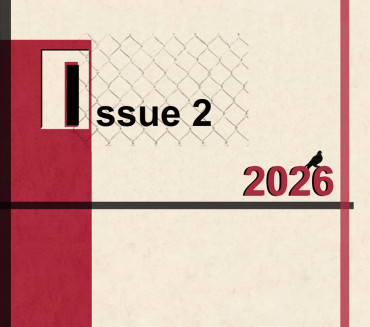
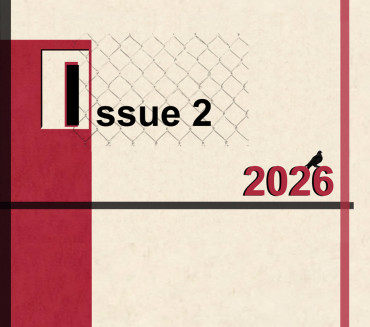
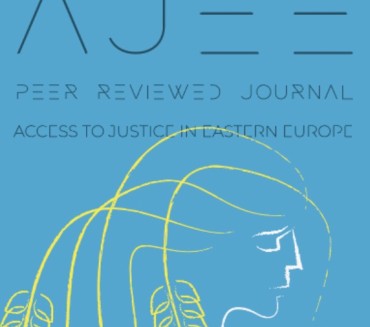
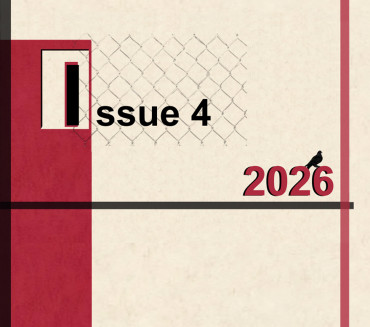
The cover, created by our new artist, serves as a powerful visual metaphor for the evolving nature of justice in an era of transition. At its center is a highly detailed, graphic eye, representing the vigilant oversight of the law and the clarity required to navigate complex social changes. It is not merely a passive observer but is integrated into a network of
geometric lines and digital-like fragments, symbolizing how modern justice is increasingly intertwined with technological advancement and data-driven reality.
To the left, the classic silhouette of Themis, or Lady Justice, appears in a layered, almost ethereal form. This juxtaposition of classical statues with modern, abstract graphics illustrates the continuity of fundamental legal principles—fairness, balance, and the rule of law—even as our methods of achieving them undergo radical transformation. This paradoxical, traditional manner of visualizing justice remains vital, yet it appears almost hidden within the new digital forms of its performance.
The composition utilizes a bold color palette of deep red and muted parchment tones, divided by sharp vertical and horizontal axes. This structure reflects the cyclical patterns of existence mentioned in our opening remarks: the rise and fall of regimes, the passing of generations, and the unceasing search for truth. The wire-mesh texture in the background suggests the barriers and complexities that often hinder "access" to justice, while the open space at the top, occupied by a single bird, hints at the hope for liberation and the renewal that a paradigm shift can bring, along with deserved peace and sustainability.
In its entirety, the design reminds us that while we navigate well-worn paths, our fundamental understanding must remain adaptive while maintaining a strong foundational basis. It is a reminder to preserve our core principles while remaining open to the radical renewal necessary to address the challenges of the 21st century.
Finally, I would like to express my sincere gratitude to our editorial team and our reviewers for their exceptional professionalism and objective assessment. In an era where the complexity of legal scholarship continues to evolve, their rigorous peer review remains the cornerstone of our publication’s quality. I am confident that our authors trust our opinion and recognize that every critique is offered as a collaborative effort to refine their work and elevate the legal discourse. Together, we strive to ensure that the findings presented in these pages—ranging from institutional integrity to the transformation of legal culture—serve as reliable foundations for both theoretical advancement and practice-oriented solutions. It is through this shared commitment to excellence that we continue to foster a deeper understanding of justice in an increasingly interconnected world.
AUTHORS INFORMATION
COMPETING INTERESTS
Prof. Iryna Izarova is the Editor-in-Chief of AJEE and, as such, has no competing interests to declare regarding the content of this Editorial. This Editorial, as is standard for this publication type, was not subject to peer review but aligns fully with the Journal's publication ethics.
DISCLAIMER
The views and opinions expressed in this Editorial are those of the author and do not necessarily reflect the official policy or position of the Journal, the Editorial Board, the publisher or any affiliated institutions.
AI DISCLOSURE
To ensure clarity and efficiency, I use Gemini Pro for linguistic support and gathering general information. I am the sole author of the ideas and conclusions expressed in my communications: I read, thoroughly verify, and take full ownership of all content. The use of AI does not replace my judgment, and I accept full responsibility for the final result, including any human errors.
RIGHTS AND PERMISSIONS
Copyright: © 2026 Iryna Izarova. This is an open access article distributed under the terms of the Creative Commons Attribution License (CC BY 4.0), which permits unrestricted use, distribution, and reproduction in any medium, provided the original author and source are credited.
ABOUT THIS ARTICLE
Cite this article
Izarova I, ‘Introductory Remarks: Navigating New Legal Paradigms’ (2026) 9(1) Access to Justice in Eastern Europe 6-11 <https://doi.org/10.33327/AJEE-18-9.1-ed0001>
DOI
https://doi.org/10.33327/AJEE-18-9.1-ed0001
Keywords
transitional justice, child-sensitive justice, human dignity, legal technology, Eastern Europe, comparative law, rule of law.
СЛОВО РЕДАКТОРА
ВСТУПНІ ЗАУВАЖЕННЯ: НАВІГАЦІЯ У НОВИХ ПРАВОВИХ ПАРАДИГМАХ
АНОТАЦІЯ
У першому випуску журналу «Access to Justice in Eastern Europe» за 2026 рік представлено результати напрацювань міжнародної когорти науковців із Болгарії, Казахстану, Латвії, Литви, Румунії, Саудівської Аравії, Об’єднаних Арабських Еміратів та України. Матеріали номера аналізують мінливий ландшафт сучасного правосуддя крізь чотири основні призми: запровадження перехідного правосуддя та захист посмертної гідності; розробку процесуальних моделей, орієнтованих на інтереси дитини та найбільш вразливих верств населення; регулювання новітніх технологій, зокрема штучного інтелекту та автономних систем озброєння; а також спеціалізовані регіональні правові виклики у таких секторах, як сільське господарство, корпоративне управління та спортивне право. Поєднуючи історичні перспективи з футуристичним правовим аналізом, в дослідженнях підкреслюється важливість дотримання концепції верховенства права та сприяння глобальному науковому діалогу в умовах зміни правових парадигм.
Abstract
The first issue of Access to Justice in Eastern Europe in 2026 presents a collection of research from a diverse international cohort of scholars representing Bulgaria, Kazakhstan, Latvia, Lithuania, Romania, Saudi Arabia, the United Arab Emirates, and Ukraine. This issue explores the evolving landscape of contemporary justice through four primary lenses: the pursuit of transitional justice and post-mortem dignity; the development of child-sensitive procedural models for the most vulnerable; the regulation of emerging technologies, including artificial intelligence and autonomous weapons; and specialized regional legal challenges in sectors such as agriculture, corporate governance, and sports law. By bridging historical perspectives with future-oriented legal analysis, this issue underscores the journal’s commitment to advancing the rule of law and fostering global scholarly dialogue amidst a shifting legal paradigm.
About Authors
Full Professor, Dr. Sc., School of Law, Taras Shevchenko National University of Kyiv,
Ukraine;
Guest Researcher at the University for Continuing Education Krems, Austria
irina.izarova@knu.ua
https://orcid.org/0000-0002-1909-7020
Editor-in-Chief of Access to Justice in Eastern Europe Journal, Chair of EASE Ukraine,
Chair of the RCPC of the European Association of Science Editors
Corresponding author, solely responsible for preparing the Editorial. I thank my
colleagues, the Managing Editors of AJEE, for their help, thoughts, and comments on my
piece, which helped me to improve it.
Competing interests: Prof. Iryna Izarova is the Editor-in-Chief of AJEE and, as such, has
no competing interests to declare regarding the content of this Editorial. This Editorial, as
is standard for this publication type, was not subject to peer review but aligns fully with the
Journal's publication ethics.
Disclaimer: The views and opinions expressed in this Editorial are those of the author and
do not necessarily reflect the official policy or position of the Journal, the Editorial Board,
the publisher or any affiliated institutions.
AI Disclosure: To ensure clarity and efficiency, I use Gemini Pro for linguistic support and gathering general information. I am the sole author of the ideas and conclusions expressed in my communications: I read, thoroughly verify, and take full ownership of all content. The use of AI does not replace my judgment, and I accept full responsibility for the final result, including any human errors.
References
Reviews for article
Add a Review
Слово редактора
ВСТУПНІ ЗАУВАЖЕННЯ: НАВІГАЦІЯ У НОВИХ ПРАВОВИХ ПАРАДИГМАХ
Ірина Ізарова
АНОТАЦІЯ
У першому випуску журналу «Access to Justice in Eastern Europe» за 2026 рік представлено результати напрацювань міжнародної когорти науковців із Болгарії, Казахстану, Латвії, Литви, Румунії, Саудівської Аравії, Об’єднаних Арабських Еміратів та України. Матеріали номера аналізують мінливий ландшафт сучасного правосуддя крізь чотири основні призми: запровадження перехідного правосуддя та захист посмертної гідності; розробку процесуальних моделей, орієнтованих на інтереси дитини та найбільш вразливих верств населення; регулювання новітніх технологій, зокрема штучного інтелекту та автономних систем озброєння; а також спеціалізовані регіональні правові виклики у таких секторах, як сільське господарство, корпоративне управління та спортивне право. Поєднуючи історичні перспективи з футуристичним правовим аналізом, в дослідженнях підкреслюється важливість дотримання концепції верховенства права та сприяння глобальному науковому діалогу в умовах зміни правових парадигм.
Publication history
How to cite it?
-
Izarova I, ‘Introductory Remarks: Navigating New Legal Paradigms’ (2026) 9(1) Access to Justice in Eastern Europe 6-11 <https://doi.org/10.33327/AJEE-18-9.1-ed0001>